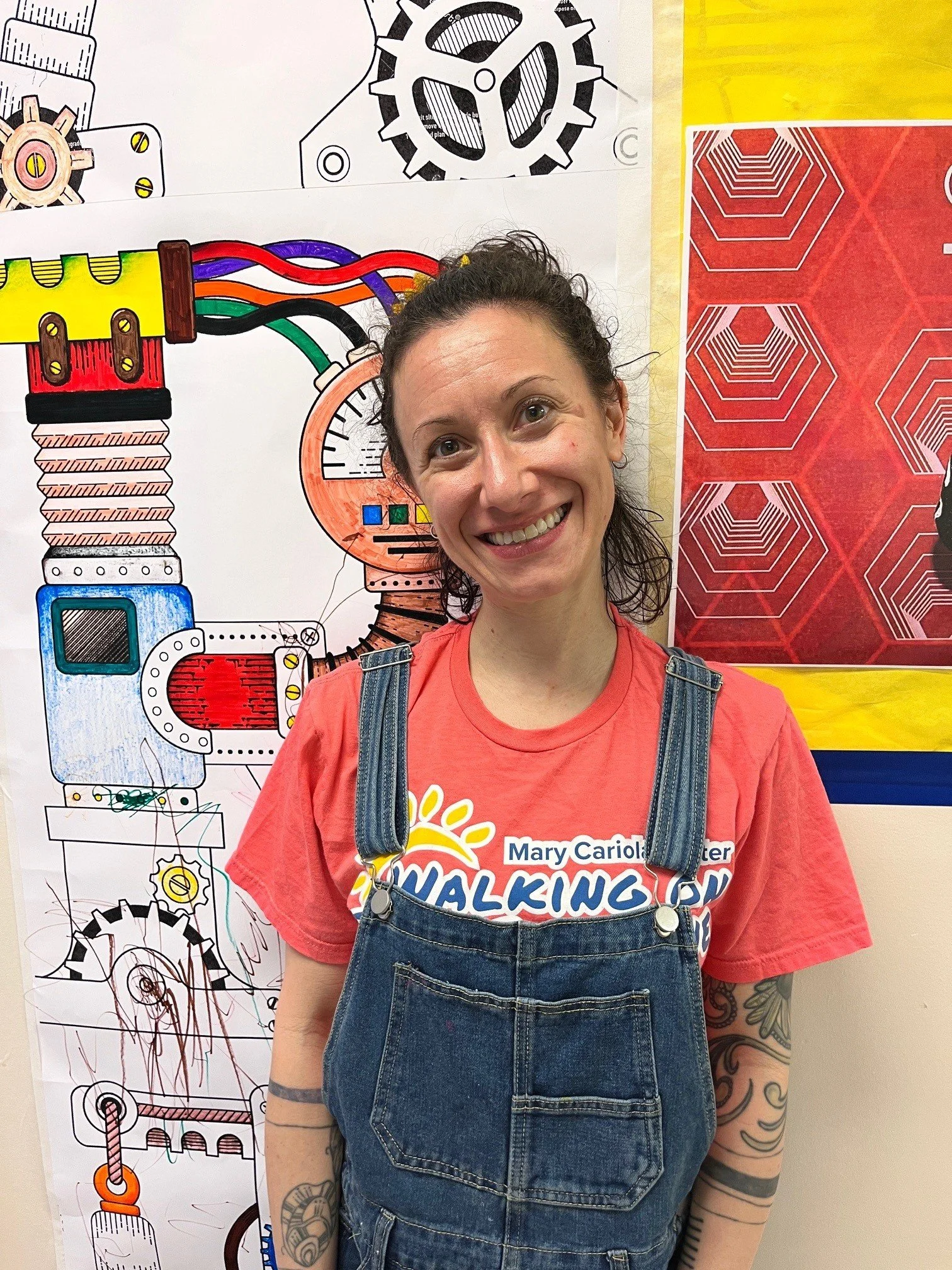
Parent, Author, Advocate, Artist…Dani Dietterick.
This month’s Guest Blogger is Teacher Assistant Dani Dietterick. Dani is an artist who has been making art for as long as she can remember. She has a daughter and a son who is autistic, and loves playing with them, making art, and messes too. Her two little people are the impetus for everything she does and were the inspiration for her book. A is for Autism, has been helpful to new parents with children with autism and is a great teaching tool for family members. Dani studied art with a specialty in 3D art and glass, and art therapy at Bowling Green University earning a BA and a BFA. She continued her education at RIT earning a Master’s Degree from the School for American Crafts. Since starting at Mary Cariola three years ago, she has been building a therapeutic art curriculum and is lucky enough to make art with 300 of the coolest kids around!
I am an artist all the way down to my bones. I never imagined I would write a book. But I did.
I never imagined I’d teach. But I do.
I have my son and the mountain we have climbed together to thank for the life I live today.
I knew my son was different very early on, but just what color and flavor of different didn’t show immediately. The picture needed time to come to light. Like a polaroid photo. As time moved on, I continued to observe.
I watched.
I waited.
I wondered.
I asked.
I was shut down.
My son’s pediatrician said things like, “he isn’t talking because boys take longer to develop,” and “crashing into things is boys being boys.” But I knew my child. Being a mom, I automatically internalized it and doubted myself: I must not have explained it right. Maybe I’m seeing things that aren’t there. But in my heart knew something was different. At his 18-month doctor’s appointment, I had had enough of being dismissed. I was not leaving without help, or answers, or something. I stopped worrying about what the doctor thought of me, or if I was irritating him.
I asked my questions and was met with yet another cavalier response- this time even more offensive than before: “He can’t be autistic; Look how handsome he is!” I was floored. This man with a decade plus of higher education suggested that autistic kids must be funny looking. There was no more benefit of the doubt to give him. I insisted on getting early intervention. He reluctantly gave the phone number to me and made sure I knew that he would not be referring my son, because he felt I was wrong. The evaluations to qualify for services require the child to have either a mild delay in multiple categories or moderate/severe in one of the five. My son had a moderate delay in one category of five, and the other four were severe. A childish slice of me wanted to go to the doctor and slap a copy of the evaluation and his school picture on the doctor’s desk with a note that says, “not handsome enough?”
I say all of this, not to indict the medical system or pediatricians as negligent, only to paint a picture of the challenges we faced just to make it to the starting line. The trek through hundreds of pages of paperwork, appointments, assessments; arguments with people who know more than I do about medicine, but who don’t know my child. I took my frustration, and I dove into research and read everything I could get my hands on. Early intervention was a lifesaver, and being able to repeat the work after they left was what really solidified it for him. He used some sign language. I had started teaching baby sign language when he was very small and he took to it well. Since he didn’t speak, I just kept going. Eventually I decided he would need to know the ASL (American Sign Language) alphabet, not just signs, so I began drawing the hand shapes with objects he could recognize to reinforce the sounds. This series of drawings grew and started lining the walls of his bedroom. Then once it was done, I copied them and made a book for him. Just pictures.
I started thinking about adding little poems or something because he liked rhythm and music. And it grew. I included stories about our journey, about our struggles, and how we persevered.
Writing them down helped me talk about it.
Talking about it with other autism parents helped them as well as me. That was the turning point.
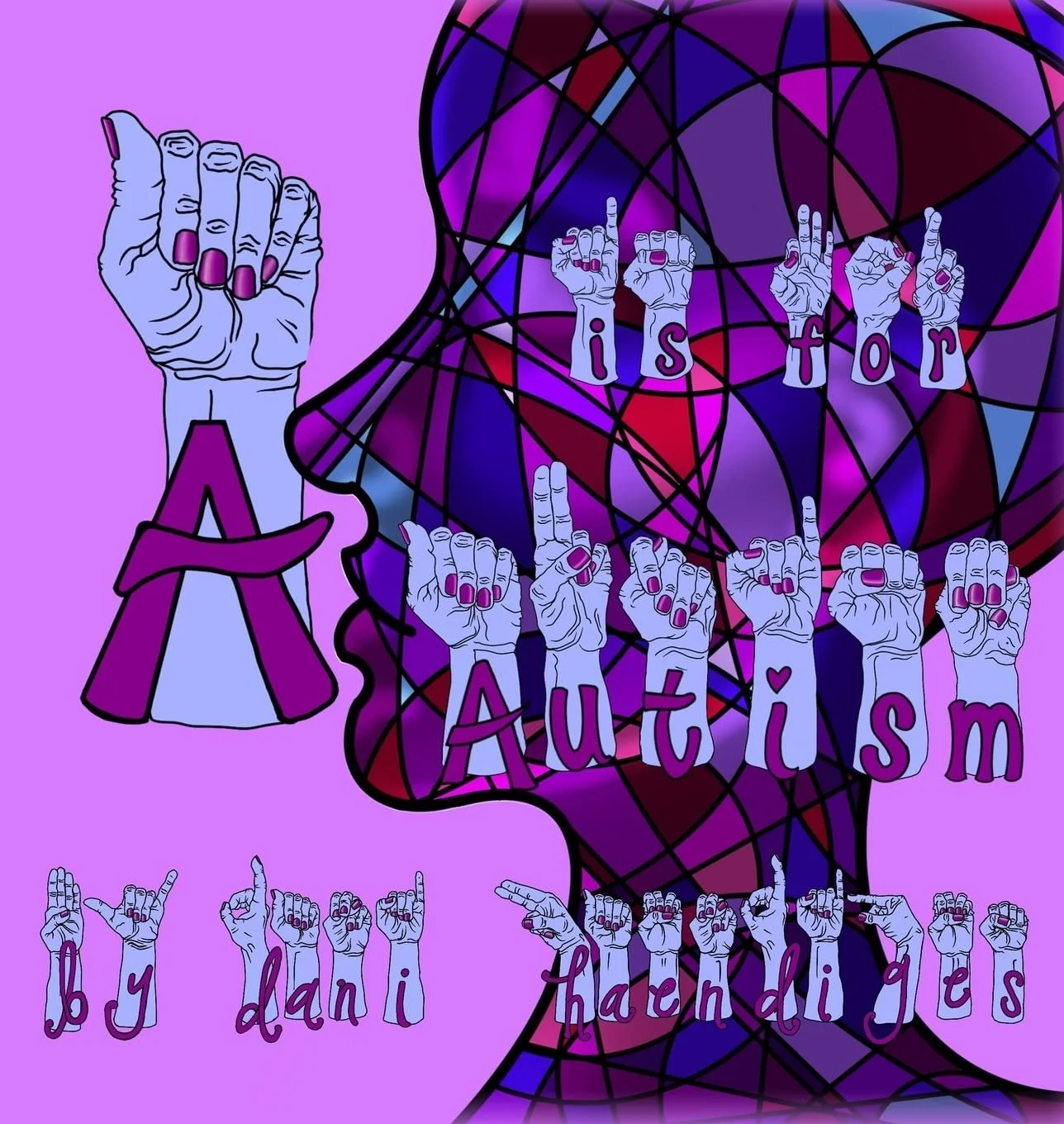
A is for Autism is available on AMAZON.com
I decided to make my stories and my understanding of neurodiversity a resource for other parents. I think of the time spent in the checkout aisle at Target, trying desperately to keep my son from putting his head through the floor. I love finding other parents in this situation- not because it’s pleasant. In fact, I wouldn’t wish these moments on my worst enemy but knowing that another person has had this same hyper-specific experience is comforting. It means you’re not alone. I want to be that comfort for someone. That is what the book is for. To help parents feel less alone, to read with their child and relatives or friends who don’t know what autism means and leave them with a basic understanding of their loved ones struggles and hopefully how to better bond and interact with them.